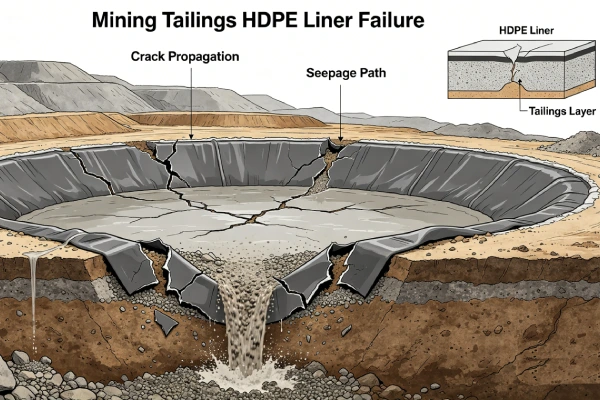
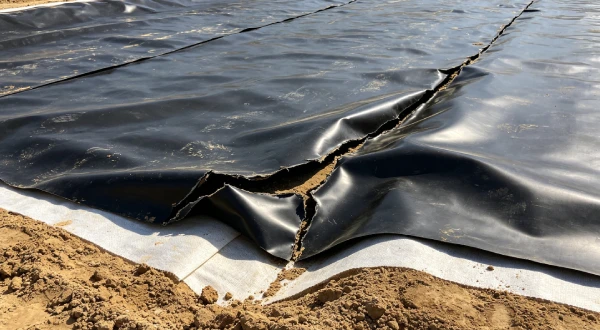
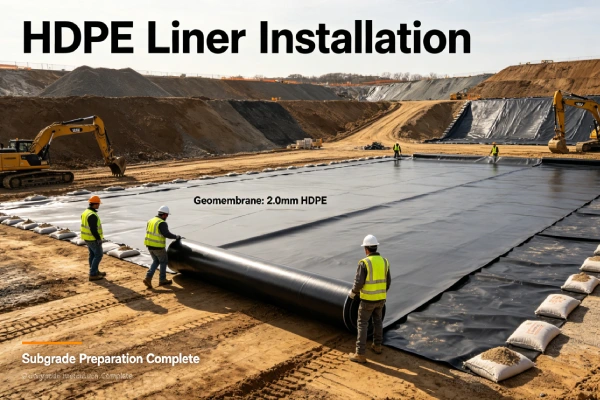
HDPE Welding in Windy Conditions 2026 | Parameter Adjustments & Protection
Application Guide 2026-08-18
Author: Senior Geomembrane Engineer, P.E. — 15+ years field experience in geomembrane welding quality management across exposed, windy, and extreme climate conditions including coastal, high-altitude, and desert environments
Reviewer: Geosynthetics Materials Specialist
Last Updated: July 15, 2026
Read Time: 13 minutes
📅 Review Cycle: This guide is updated quarterly. Last verified: July 15, 2026
📋 Executive Summary — For Engineers in a Hurry
- Wind is a critical factor in HDPE welding quality — even moderate winds (10–20 km/h) can reduce weld temperature by 15–25°C at the weld interface
- Wind speeds > 20 km/h require welding shelters — without protection, weld quality cannot be reliably maintained
- Parameter adjustments for windy conditions include reducing speed by 10–20%, increasing wedge temperature by 10–20°C, and increasing roller pressure by 10–15%
- Wind protection measures include portable shelters, windbreaks, on-site enclosures, and scheduling welding during low-wind periods
- Destructive testing frequency must be increased in windy conditions — every 75m instead of every 150m
- Continuous wind speed monitoring is essential — anemometers must be used, and welding stopped when wind exceeds 30–35 km/h
⚠️ Critical Engineering Statement — Wind is a Quality Killer, Not a Minor Inconvenience
Wind is one of the most underestimated threats to HDPE weld quality. Even moderate wind speeds can cause weld defects that are not immediately visible but lead to premature failure.
- Wind speeds of 15–25 km/h can reduce weld interface temperature by 20–30°C, creating cold welds
- Wind chill effect is significant — the effective temperature at the weld zone is 5–15°C lower than ambient
- Protection measures are essential — welding shelters or windbreaks must be used in any wind > 20 km/h
- Parameter adjustments alone are insufficient — without physical wind protection, adjustments cannot compensate for heat loss
- Quality verification must be increased — destructive testing frequency and leak testing must be more rigorous in windy conditions
A weld made in 25 km/h wind without protection is likely defective, regardless of parameter adjustments. Wind protection is not optional — it is essential for quality.
📑 Table of Contents
1️⃣ Search Intent Introduction
2️⃣ Common Engineering Questions About Welding in Windy Conditions
3️⃣ Why HDPE Is Used — Material Science Focus
4️⃣ Wind Effects on HDPE Welding
5️⃣ Parameter Adjustments for Windy Conditions
6️⃣ Wind Protection Methods and Equipment
7️⃣ Extrusion Welding in Windy Conditions
8️⃣ Real Engineering Failure Cases
9️⃣ Comparison With Alternative Liner Systems
🔟 Quality Control and CQA Requirements
1️⃣1️⃣ Professional Engineering Recommendation
1️⃣2️⃣ FAQ Section
1️⃣3️⃣ Technical Conclusion
1️⃣ Search Intent Introduction
This guide addresses the engineering question of how wind affects HDPE geomembrane welding quality and how to adjust parameters and implement protection measures to maintain quality in windy conditions. The primary audience includes welding supervisors, CQA engineers, EPC contractors, installation managers, and quality control personnel responsible for seam quality in exposed, windy locations.
Understanding wind effects and mitigation strategies is essential for achieving consistent seam quality, meeting acceptance criteria, and preventing seam failures in challenging environmental conditions. This is not an introductory overview — it is a data-driven engineering reference for professionals responsible for welding quality in windy and exposed environments.
Real-world challenges of welding in windy conditions include:
- ✅ Heat loss from the weld zone — wind removes heat faster than the wedge can supply it
- ✅ Cold weld risk — insufficient heat at the weld interface creates incomplete fusion
- ✅ Cooling rate acceleration — rapid cooling can create brittle weld structures
- ✅ Debris contamination — wind-blown dust and dirt contaminate the weld zone
- ✅ Equipment stability — wind affects welding machine operation and accuracy
- ✅ Safety concerns — wind creates hazards for operators and equipment
2️⃣ Common Engineering Questions About Welding in Windy Conditions
Q1: What wind speed affects HDPE welding?
Wind speeds as low as 10–15 km/h (6–9 mph) can affect weld quality by cooling the weld zone. Wind speeds > 20 km/h (12 mph) require protection measures. Welding should be stopped at wind speeds > 30–35 km/h (18–22 mph).
Q2: How does wind affect weld quality?
Wind removes heat from the weld zone through convection. The effective temperature at the weld interface can be 15–25°C lower than the wedge temperature in moderate winds. This creates cold welds with incomplete fusion.
Q3: What parameter adjustments are needed in windy conditions?
In windy conditions: reduce speed by 10–20%, increase wedge temperature by 10–20°C, increase roller pressure by 10–15%, and increase overlap width by 10–20mm. These adjustments compensate for heat loss.
Q4: What wind protection measures are effective?
Effective measures include: portable welding shelters (enclosures), windbreaks (tarps or screens), on-site enclosures (tents), scheduling welding during low-wind periods, and orientation of the welding direction downwind.
Q5: Can welding be done without protection in wind?
Welding without protection is only acceptable in wind speeds < 15 km/h. Even then, parameter adjustments are recommended. Above 20 km/h, protection is essential. Above 30–35 km/h, welding should be stopped.
Q6: How does wind affect hot wedge vs extrusion welding?
Wind affects both methods but is more critical for hot wedge welding (larger exposed area). Extrusion welding has a smaller weld zone but is still affected by cooling of the filler rod and preheat area.
Q7: How does wind affect destructive test results?
Wind-affected welds typically show peel strength 20–50% below acceptance criteria, with failure occurring at the weld interface (cold weld). Shear strength may also be reduced. Testing frequency should be increased.
Q8: What equipment is needed for wind protection?
Equipment includes: portable welding shelters (enclosures), windbreaks (tarps, screens), anemometers for wind measurement, temperature probes for weld zone monitoring, and adequate anchoring for shelters.
Q9: How should welding be scheduled in windy locations?
Schedule welding during the calmest periods (typically early morning or late evening). Monitor weather forecasts for wind predictions. Have wind protection equipment ready for unexpected wind changes.
Q10: What is the most common failure from wind-affected welding?
The most common failure is cold weld — incomplete fusion at the weld interface. This is not visible to the naked eye and is only detected by destructive testing or leak testing. Cold welds fail under stress.
3️⃣ Why HDPE Is Used — Material Science Focus
HDPE dominates containment liner applications due to its excellent chemical resistance, low permeability, high tensile strength, and weldability. Understanding the material’s thermal properties is essential for managing wind effects on welding.
Thermal Conductivity and Heat Loss: HDPE has low thermal conductivity (approximately 0.4–0.5 W/m·K). However, heat loss to the environment through convection (wind) is significant. The heat transfer coefficient increases with wind speed, removing heat from the weld zone.
Convective Heat Transfer: Wind increases the convective heat transfer coefficient at the weld surface. At 20 km/h wind speed, the heat transfer coefficient is approximately 2–3x higher than in still air. This removes heat that would otherwise contribute to fusion.
Melting Temperature: HDPE melts at 120–130°C. The welding temperature (420–490°C) is set to overcome heat loss. In windy conditions, heat loss is greater, requiring higher wedge temperature or slower speed.
Cooling Rate: Wind increases the cooling rate of the weld. Rapid cooling can create brittle weld structures and reduce interdiffusion of molecular chains. The cooling rate in 20 km/h wind is approximately 2–3x faster than in still air.
Stress Crack Resistance (NCTL per ASTM D5397): Cold welds from wind-affected welding have reduced stress crack resistance. Resins with NCTL ≥ 1000 hours provide greater margin against weld-related ESC. GRI-GM13 requires NCTL ≥ 500 hours.
Carbon Black Content: Carbon black (2–3%) affects heat absorption during welding. Higher carbon black content may require parameter adjustments. Proper dispersion (ASTM D5596 rating ≥ 1) ensures uniform welding properties.
Alternatives Comparison: HDPE vs Other Liner Materials for Wind Resistance
| Property | HDPE | LLDPE | fPP | PVC | GCL |
|---|---|---|---|---|---|
| Wind sensitivity | Moderate | Moderate | High | Low (solvent) | N/A |
| Maximum wind for welding (no protection) | 15 km/h | 15 km/h | 10 km/h | N/A | N/A |
| Maximum wind with protection | 30–35 km/h | 30 km/h | 25 km/h | N/A | N/A |
| Parameter adjustment required | Yes | Yes | Yes | No | N/A |
| Wind protection required | > 20 km/h | > 20 km/h | > 15 km/h | No | N/A |
| Destructive testing frequency | Increased | Increased | Increased | N/A | N/A |
| Field weldability in wind | Good (with protection) | Good | Fair | Good | N/A |
| Cost relative to HDPE | 1.0x | 1.0–1.1x | 1.5–2.0x | 1.2–1.5x | 0.6–0.8x |
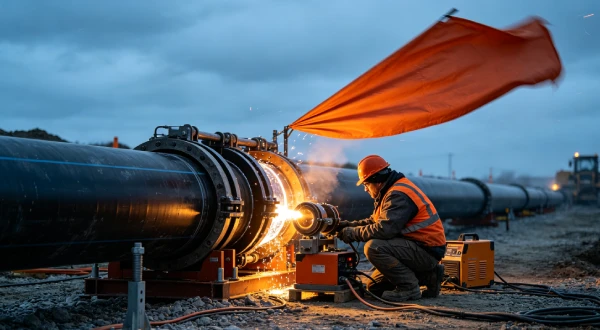
4️⃣ Wind Effects on HDPE Welding
Wind affects every aspect of HDPE welding. Understanding these effects is essential for quality control.
Wind Speed Effects:
| Wind Speed | Effect on Weld Zone | Parameter Adjustment Required |
|---|---|---|
| < 10 km/h | Negligible effect | None |
| 10–15 km/h | Minor cooling, 5–10°C heat loss | Slight adjustments recommended |
| 15–20 km/h | Moderate cooling, 10–20°C heat loss | Adjustments required |
| 20–25 km/h | Significant cooling, 20–30°C heat loss | Protection + adjustments required |
| 25–30 km/h | Severe cooling, 30–40°C heat loss | Protection essential, stop if possible |
| > 30 km/h | Welding not recommended | Stop welding |
Table scrolls horizontally on mobile
Temperature Reduction from Wind:
| Wind Speed | Effective Temperature Reduction at Weld |
|---|---|
| 10 km/h | 5–10°C |
| 15 km/h | 10–15°C |
| 20 km/h | 15–25°C |
| 25 km/h | 25–35°C |
| 30 km/h | 35–45°C |
Table scrolls horizontally on mobile
Cooling Rate Increase:
| Wind Speed | Cooling Rate (relative to still air) |
|---|---|
| 0 km/h | 1x (baseline) |
| 10 km/h | 1.5–2x |
| 20 km/h | 2–3x |
| 30 km/h | 3–5x |
Table scrolls horizontally on mobile
Wind Direction Effects:
| Wind Direction | Effect |
|---|---|
| Headwind | Direct cooling of weld zone, most damaging |
| Crosswind | Moderate cooling, affects wedge and weld |
| Tailwind | Least damaging, wind moves with weld |
| Variable | Most unpredictable, greatest quality risk |
5️⃣ Parameter Adjustments for Windy Conditions
Parameter adjustments compensate for wind-induced heat loss but cannot replace physical protection.
Parameter Adjustment Guidelines:
| Wind Speed | Speed Change | Temperature Change | Pressure Change |
|---|---|---|---|
| 10–15 km/h | Reduce speed 5–10% | Increase 5–10°C | Increase 5–10% |
| 15–20 km/h | Reduce speed 10–15% | Increase 10–15°C | Increase 10–15% |
| 20–25 km/h | Reduce speed 15–20% | Increase 15–20°C | Increase 15–20% |
| > 25 km/h | Protection required | Protection required | Protection required |
Table scrolls horizontally on mobile
Speed and Temperature Adjustments by Liner Thickness:
| Thickness | No Wind Speed/Temp | 15–20 km/h Wind | 20–25 km/h Wind |
|---|---|---|---|
| 1.5mm | 2.0–3.0 / 420–450°C | 1.8–2.5 / 430–460°C | 1.5–2.0 / 440–470°C |
| 2.0mm | 1.5–2.5 / 440–470°C | 1.3–2.0 / 455–485°C | 1.0–1.5 / 470–500°C |
| 2.5mm | 1.0–2.0 / 460–490°C | 0.8–1.5 / 475–505°C | 0.6–1.0 / 490–520°C |
Table scrolls horizontally on mobile
Additional Parameter Considerations:
- ✅ Roller pressure: Increase 10–15% to compensate for sheet stiffness in wind
- ✅ Overlap width: Increase 10–20mm to provide wider weld zone
- ✅ Preheat time: Allow longer preheat for wedge to reach stable temperature
- ✅ Needle insertion: Ensure secure insertion, wind can dislodge test needles
6️⃣ Wind Protection Methods and Equipment
Physical wind protection is essential for welding quality in windy conditions.
Protection Methods:
| Method | Description | Effectiveness |
|---|---|---|
| Portable shelters | Enclosed welding shelters | Very High |
| Windbreaks | Tarps or screens upwind | High |
| On-site enclosures | Tents or temporary structures | Very High |
| Schedule management | Weld during low-wind periods | Moderate |
| Orientation | Weld downwind | Moderate |
Table scrolls horizontally on mobile
Portable Welding Shelters:
| Feature | Requirement |
|---|---|
| Structure | Rigid frame, portable |
| Covering | Wind-resistant material |
| Size | Minimum 2m × 2m × 1.8m |
| Anchoring | Weighted base or stakes |
| Access | Openings for liner and equipment |
Windbreak Requirements:
| Parameter | Requirement |
|---|---|
| Height | Minimum 1.5m above weld zone |
| Length | Extend 5–10m upwind |
| Material | Wind-resistant tarp or screen |
| Support | Poles or frames, anchored |
| Gap | No gaps at ground level |
On-Site Enclosures:
| Feature | Requirement |
|---|---|
| Structure | Temporary tent or structure |
| Covering | Wind-resistant material |
| Size | Cover entire work area |
| Anchoring | Weighted base or stakes |
| Access | Vehicle and liner access |
7️⃣ Extrusion Welding in Windy Conditions
Extrusion welding is also affected by wind, though the smaller weld zone provides some advantage.
Extrusion Welding Parameter Adjustments:
| Parameter | No Wind | Windy Conditions |
|---|---|---|
| Travel speed | 0.5–0.7 m/min | Reduce 10–20% |
| Preheat temperature | 200–220°C | Increase 10–20°C |
| Filler rod temperature | 200–240°C | Increase 10–20°C |
| Extrusion pressure | 1–2 MPa | Increase 10–15% |
Table scrolls horizontally on mobile
Extrusion Welding Wind Protection:
- ✅ Local shielding: Use handheld shields or deflectors
- ✅ Preheat protection: Protect preheat zone from wind
- ✅ Filler rod storage: Keep filler rods covered and dry
- ✅ Windbreaks: Same as for hot wedge welding
8️⃣ Real Engineering Failure Cases
Case 1: Wind-Affected Cold Weld — Coastal Landfill, 2018
Specification used: 2.0mm HDPE, standard parameters (2.0 m/min, 450°C) in 25 km/h wind. No wind protection.
Observed failure: Cold welds across multiple seams. Peel strength tested at 60–80 N/25mm. Seam separation under stress. Destructive testing identified the issue.
Timeline:
2018: 2.0mm HDPE installed in 25 km/h wind
2018: Standard parameters, no wind protection
2018: Destructive testing showed cold welds
2018: Seam replacement and wind protection installed
2018-2019: Quality control enhanced
Cost: $1.2M (seam replacement + investigation + remediation)
Root cause: 25 km/h wind created significant heat loss. Standard parameters (2.0 m/min, 450°C) were inadequate. No wind protection was used. Required adjustments: speed 1.5–1.8 m/min, temperature 470–490°C, plus wind protection.
Engineering lesson: Wind speeds > 20 km/h require protection. Parameter adjustments alone are insufficient. Destructive testing at 75m intervals in windy conditions.
Case 2: Variable Wind Failure — Open Prairie Site, 2020
Specification used: 2.0mm HDPE, parameters adjusted for average wind (1.8 m/min, 465°C). No wind protection. Wind varied from 10–35 km/h.
Observed failure: Inconsistent weld quality across the project. Peel strength ranged from 60–180 N/25mm. Seam failure at low-strength locations.
Timeline:
2020: 2.0mm HDPE installed, variable wind 10-35 km/h
2020: Parameters set for average wind (1.8 m/min, 465°C)
2020: Inconsistent weld quality detected
2020: Seam replacement, wind protection installed
2020-2021: Parameter logging implemented
Cost: $1.5M (seam replacement + investigation + monitoring)
Root cause: Variable wind (10–35 km/h) with no protection or real-time adjustment. Parameters set for average conditions failed when wind was at extremes. Variable wind required continuous monitoring and adjustment.
Engineering lesson: Continuous wind monitoring required in variable conditions. Adjust parameters in real time. Use wind protection to stabilise conditions. Destructive testing in variable wind conditions.
Case 3: Extrusion Welding Wind Failure — High-Altitude Site, 2021
Specification used: 2.0mm HDPE, extrusion welding at 0.6 m/min, 200°C preheat. 30 km/h wind, no protection.
Observed failure: Extrusion weld failure at terminations. Cracks along weld interface. Peel strength below acceptance criteria.
Timeline:
2021: 2.0mm HDPE installed, extrusion welding
2021: 30 km/h wind, no protection
2021: Extrusion weld failure at terminations
2021: Wind protection installed, parameters adjusted
2021: Welds replaced
Cost: $0.8M (weld replacement + protection + investigation)
Root cause: 30 km/h wind cooled preheat and filler rod before fusion. No wind protection was used. Required adjustments: speed 0.4–0.5 m/min, preheat 220–240°C, plus wind protection.
Engineering lesson: Extrusion welding also requires wind protection. Preheat affected area and protect from wind. Reduce speed in windy conditions.
Failure Case Cost Summary
| Case | Location | Failure Mode | Cost | Primary Lesson |
|---|---|---|---|---|
| Case 1 | Coastal | Cold weld from wind | $1.2M | Wind > 20 km/h requires protection |
| Case 2 | Open prairie | Variable wind failure | $1.5M | Continuous monitoring and adjustment |
| Case 3 | High-altitude | Extrusion wind failure | $0.8M | Protection required for extrusion welding |
9️⃣ Comparison With Alternative Liner Systems
| Property | HDPE (2.0mm) | LLDPE (1.5mm) | fPP (1.5mm) | PVC (1.5mm) | GCL |
|---|---|---|---|---|---|
| Wind sensitivity | Moderate | Moderate | High | Low (solvent) | N/A |
| Maximum wind for welding (no protection) | 15 km/h | 15 km/h | 10 km/h | N/A | N/A |
| Maximum wind with protection | 30–35 km/h | 30 km/h | 25 km/h | N/A | N/A |
| Parameter adjustment required | Yes | Yes | Yes | No | N/A |
| Wind protection required | > 20 km/h | > 20 km/h | > 15 km/h | No | N/A |
| Destructive testing frequency | Increased | Increased | Increased | N/A | N/A |
| Field weldability in wind | Good (with protection) | Good | Fair | Good | N/A |
| Cost relative to HDPE | 1.0x | 1.0–1.1x | 1.5–2.0x | 1.2–1.5x | 0.6–0.8x |
Table scrolls horizontally on mobile
🔟 Quality Control and CQA Requirements
Wind Monitoring:
- ✅ Anemometer: On-site wind speed measurement
- ✅ Direction: Record wind direction relative to weld
- ✅ Frequency: Continuous during welding operations
- ✅ Logging: Record wind speed and direction hourly
Parameter Adjustment Log:
| Parameter | Recorded Data |
|---|---|
| Time | At each adjustment |
| Wind speed | At start and hourly |
| Wind direction | Relative to weld |
| Wedge temperature | Before each weld |
| Welding speed | During each weld |
| Destructive test results | For each wind condition |
Table scrolls horizontally on mobile
Destructive Testing Frequency:
| Wind Condition | Testing Frequency |
|---|---|
| < 10 km/h | Every 150m |
| 10–15 km/h | Every 100m |
| 15–20 km/h | Every 75m |
| 20–25 km/h | Every 50m (with protection) |
| > 25 km/h | Every 50m + stop if > 30 km/h |
Table scrolls horizontally on mobile
Acceptance Criteria:
| Thickness | Peel Strength | Shear Strength |
|---|---|---|
| 1.5mm | ≥ 150 N/25mm | ≥ 200 N/25mm |
| 2.0mm | ≥ 150 N/25mm | ≥ 200 N/25mm |
| 2.5mm | ≥ 250 N/25mm | ≥ 200 N/25mm |
1️⃣1️⃣ Professional Engineering Recommendation
Wind Condition Action Matrix:
| Wind Speed | Action | Parameter Adjustment | Protection |
|---|---|---|---|
| < 10 km/h | Normal welding | None | Not required |
| 10–15 km/h | Caution, adjust parameters | Slight adjustments | Recommended |
| 15–20 km/h | Adjust parameters | Moderate adjustments | Required |
| 20–25 km/h | Adjust + protect | Significant adjustments | Essential |
| 25–30 km/h | Protect + consider stopping | Maximum adjustments | Essential |
| > 30 km/h | Stop welding | N/A | Stop welding |
Table scrolls horizontally on mobile
When to Stop Welding:
- ✅ Sustained wind > 30 km/h — stop all welding
- ✅ Gusting > 35 km/h — stop even if average is lower
- ✅ Wind protection failure — stop until protection restored
- ✅ Destructive test failure — stop and investigate
- ✅ Visibility reduced by dust — stop until conditions improve
Equipment Requirements:
- ✅ Anemometer: Accurate, calibrated
- ✅ Portable shelters: For all welding operations in wind
- ✅ Windbreaks: For site-wide protection
- ✅ Temperature probes: For weld zone monitoring
- ✅ Spare equipment: For wind damage
1️⃣2️⃣ FAQ Section
Q1: What wind speed affects HDPE welding?
Wind speeds as low as 10–15 km/h (6–9 mph) can affect weld quality by cooling the weld zone. Wind speeds > 20 km/h (12 mph) require protection measures. Welding should be stopped at wind speeds > 30–35 km/h (18–22 mph).
Q2: How does wind affect weld quality?
Wind removes heat from the weld zone through convection. The effective temperature at the weld interface can be 15–25°C lower than the wedge temperature in moderate winds. This creates cold welds with incomplete fusion.
Q3: What parameter adjustments are needed in windy conditions?
In windy conditions: reduce speed by 10–20%, increase wedge temperature by 10–20°C, increase roller pressure by 10–15%, and increase overlap width by 10–20mm. These adjustments compensate for heat loss.
Q4: What wind protection measures are effective?
Effective measures include: portable welding shelters (enclosures), windbreaks (tarps or screens), on-site enclosures (tents), scheduling welding during low-wind periods, and orientation of the welding direction downwind.
Q5: Can welding be done without protection in wind?
Welding without protection is only acceptable in wind speeds < 15 km/h. Even then, parameter adjustments are recommended. Above 20 km/h, protection is essential. Above 30–35 km/h, welding should be stopped.
Q6: How does wind affect hot wedge vs extrusion welding?
Wind affects both methods but is more critical for hot wedge welding (larger exposed area). Extrusion welding has a smaller weld zone but is still affected by cooling of the filler rod and preheat area.
Q7: How does wind affect destructive test results?
Wind-affected welds typically show peel strength 20–50% below acceptance criteria, with failure occurring at the weld interface (cold weld). Shear strength may also be reduced. Testing frequency should be increased.
Q8: What equipment is needed for wind protection?
Equipment includes: portable welding shelters (enclosures), windbreaks (tarps, screens), anemometers for wind measurement, temperature probes for weld zone monitoring, and adequate anchoring for shelters.
Q9: How should welding be scheduled in windy locations?
Schedule welding during the calmest periods (typically early morning or late evening). Monitor weather forecasts for wind predictions. Have wind protection equipment ready for unexpected wind changes.
Q10: What is the most common failure from wind-affected welding?
The most common failure is cold weld — incomplete fusion at the weld interface. This is not visible to the naked eye and is only detected by destructive testing or leak testing. Cold welds fail under stress.
1️⃣3️⃣ Technical Conclusion
Wind is a critical factor in HDPE geomembrane welding quality, often underestimated in field operations. Wind speeds as low as 10–15 km/h can affect weld quality by cooling the weld zone through convection. Wind speeds > 20 km/h require protection measures, and welding should be stopped at speeds > 30–35 km/h. The effective temperature at the weld interface can be 15–25°C lower than wedge temperature in moderate winds, creating cold welds with incomplete fusion.
Parameter adjustments are necessary in windy conditions: reduce speed by 10–20%, increase wedge temperature by 10–20°C, and increase roller pressure by 10–15%. However, parameter adjustments alone are insufficient — physical wind protection is essential for quality. Portable welding shelters, windbreaks, and on-site enclosures are effective protection measures.
Extrusion welding is also affected by wind, though the smaller weld zone provides some advantage. Travel speed should be reduced by 10–20%, preheat temperature increased by 10–20°C, and local shielding used to protect the weld zone. Parameter adjustments and protection are essential for extrusion welding in wind.
Quality verification must be increased in windy conditions. Destructive testing frequency should be increased to every 75m (from every 150m) in moderate wind, and to every 50m in high wind. Continuous wind speed monitoring with anemometers is essential. Wind speed and direction must be recorded with all test results.
The cost of wind-related seam failures ($0.5–1.5M) far exceeds the cost of wind protection equipment and procedures ($10,000–50,000 per project). Wind protection, parameter adjustment, and increased quality control are the most cost-effective strategies for maintaining weld quality in windy conditions. A weld made in windy conditions without protection is likely defective, regardless of parameter adjustments — wind protection is not optional, it is essential for quality.
📚 Related Technical Guides
HDPE Geomembrane Welding in Windy Conditions: A CQA Engineer's Field ManualPortable Welding Shelters: Design, Setup, and Operation for Wind ProtectionWindbreak Design and Installation for Geomembrane Welding OperationsParameter Adjustment for Environmental Conditions: Wind, Temperature, and HumidityHDPE Geomembrane Failure Investigation: Wind-Related Seam Failures