HDPE Liner Roll Handling Storage 2026 | On-Site Procedures & Protection
Failure Analysis 2026-07-27
Author: Senior Geomembrane Engineer, P.E. — 15+ years field experience in geomembrane logistics, roll handling, storage management, and CQA across landfill, mining, and wastewater projects
Reviewer: Geosynthetics Materials Specialist
Last Updated: July 24, 2026
Read Time: 13 minutes
📅 Review Cycle: This guide is updated quarterly. Last verified: July 24, 2026
📋 Executive Summary — For Engineers in a Hurry
- Proper roll handling and storage are critical to liner quality — improper storage can cause damage costing 10–30% of material value, with UV damage, core crushing, and edge damage being the most common issues
- UV exposure must be limited — HDPE rolls should be stored indoors or under opaque covers; outdoor storage is limited to 30 days maximum in temperate climates and 15 days in tropical climates
- Roll handling requires proper equipment — forklifts with appropriate attachments, spreader bars, and slings prevent roll damage during movement
- Storage area requirements — level, well-drained surface, good ventilation, protection from moisture, chemicals, and traffic
- Roll rotation and traceability — FIFO (First-In, First-Out) inventory management with complete documentation is essential for quality control
- CQA requirements include — roll inspection upon receipt, storage condition monitoring, damage documentation, and traceability records
⚠️ Critical Engineering Statement — Roll Storage is Not “Just Warehouse Keeping”
Improper roll handling and storage is a leading cause of liner damage that is entirely preventable. Damage that occurs during handling or storage can render a roll unusable, costing thousands of dollars and causing project delays.
- UV damage can occur within 15–30 days of outdoor storage without protection
- Core crushing from improper stacking can cause unusable material at the roll ends
- Edge damage from poor handling creates waste and unusable sections
- Moisture damage can cause roll deterioration and welding issues
- Traceability loss can result in unverified material being installed
A roll damaged during handling or storage is just as defective as a roll with material quality issues. Proper handling and storage procedures protect the investment in high-quality geomembrane material.
📑 Table of Contents
1️⃣ Search Intent Introduction
2️⃣ Common Engineering Questions About Roll Handling and Storage
3️⃣ Why HDPE Is Used — Material Science Focus
4️⃣ Roll Receiving and Inspection
5️⃣ Storage Area Requirements
6️⃣ Roll Storage Practices
7️⃣ UV Protection and Exposure Limits
8️⃣ Real Engineering Failure Cases
9️⃣ Comparison With Alternative Liner Systems
🔟 CQA Requirements for Roll Management
1️⃣1️⃣ Professional Engineering Recommendation
1️⃣2️⃣ FAQ Section
1️⃣3️⃣ Technical Conclusion
1️⃣ Search Intent Introduction
This guide addresses the engineering question of how to handle and store HDPE geomembrane rolls on site to maintain quality and prevent damage. The primary audience includes installation supervisors, project managers, CQA engineers, EPC contractors, and facility owners responsible for material handling and quality control.
Understanding proper roll handling and storage procedures is essential for protecting material quality, maintaining traceability, and preventing damage that could compromise the final installation. This is not an introductory overview — it is a data-driven engineering reference for professionals managing on-site geomembrane logistics.
Real-world challenges in roll handling and storage include:
- ✅ UV exposure — degradation of the outer layers of stored rolls
- ✅ Physical damage — core crushing, edge damage, surface abrasion
- ✅ Moisture contamination — water ingress between roll layers
- ✅ Traceability loss — inability to verify material specification and batch
- ✅ Limited storage space — site constraints requiring careful planning
- ✅ Access and handling — equipment availability and manoeuvrability
2️⃣ Common Engineering Questions About Roll Handling and Storage
Q1: What are the standard roll dimensions and weights for HDPE liner?
Typical roll dimensions: 5–7m wide, 50–150m long, weighing 1,500–4,500 kg. Thicker liners (2.5mm) are heavier and require heavier handling equipment. GRI-GM13 provides specifications for roll dimensions.
Q2: How long can HDPE rolls be stored outdoors without protection?
Without UV protection, HDPE rolls should not be stored outdoors for more than 15–30 days depending on climate. UV damage to the outer layer occurs within 30 days of exposure, creating surface degradation that can affect welding.
Q3: What type of UV protection is required for roll storage?
UV protection includes: indoor storage (preferred), opaque tarpaulins (minimum 80% UV block), reflective covers, or white/light-coloured covers to reduce heat absorption. Covers must be ventilated to prevent moisture build-up.
Q4: How should rolls be stacked for storage?
Rolls should be stored on their ends (vertical) or on their sides (horizontal) on a flat, clean surface. Stacking height must be limited — no more than 3 rolls high to prevent core crushing. Cradles or racks should be used for horizontal storage.
Q5: What equipment is required for roll handling?
Equipment includes: forklifts with roll handling attachments, spreader bars for lifting, slings, and cranes for oversized rolls. Sharp edges and chains must be avoided to prevent liner damage. GRI-GM13 provides handling guidance.
Q6: How should rolls be inspected upon receipt?
Inspection includes: verify material type and thickness, check for damage (tears, edge damage, moisture), verify roll dimensions and weight, confirm batch numbers and test certificates, and photograph any damage.
Q7: What is the maximum storage time for HDPE rolls?
HDPE rolls can be stored for 6–12 months under proper conditions (covered, dry, temperature-controlled). Outdoor storage without cover should be limited to 15–30 days. Extended storage requires regular inspection.
Q8: How should rolls be stored in wet conditions?
In wet conditions: store on elevated platforms (pallets or blocks), cover with waterproof tarpaulins (with ventilation), ensure drainage away from storage area, and avoid ground contact. Moisture ingress between layers can cause welding issues.
Q9: How should rolls be rotated for inventory management?
Use FIFO (First-In, First-Out) inventory management. Each roll should be labelled with arrival date, batch number, and material specification. The oldest material should be used first to prevent extended storage of any roll.
Q10: What documentation is required for roll management?
Documentation includes: delivery dockets, inspection reports, storage records (location, date, conditions), movement logs (when moved to installation), and photographs of any damage.
3️⃣ Why HDPE Is Used — Material Science Focus
HDPE dominates liner applications due to its excellent chemical resistance, low permeability, high tensile strength, and weldability. However, its susceptibility to UV degradation and physical damage makes proper handling and storage essential.
UV Sensitivity: HDPE is susceptible to UV degradation, which causes surface embrittlement and chain scission. Carbon black (2–3%) provides UV protection, but only the outer layer is protected. Extended UV exposure causes surface degradation that can affect welding.
Mechanical Properties and Damage Sensitivity: HDPE has high tensile strength but is susceptible to abrasion, edge damage, and core crushing. Sharp handling points can create stress concentrations that lead to failure. The material’s viscoelastic behaviour means that deformation from handling can be permanent.
Creep and Compression: Under sustained loading (stacking), HDPE can creep and deform. Core crushing from improper stacking causes unusable material at the roll ends. Creep behaviour is temperature-dependent (faster at higher temperatures).
Moisture Sensitivity: HDPE is not water-absorbent, but moisture trapped between layers during storage can cause contamination at the weld interface. Moisture must be removed before welding, but trapped moisture can be difficult to remove.
Thermal Expansion: HDPE CTE of 0.2 mm/m/°C affects roll storage in temperature extremes. Rolls stored in direct sunlight can reach 60–80°C, causing expansion and potential deformation.
Stress Crack Resistance (NCTL per ASTM D5397): Handling damage creates stress concentrators that can initiate ESC. Proper handling prevents stress concentrators from forming. GRI-GM13 requires NCTL ≥ 500 hours.
Alternatives Comparison: HDPE vs Other Liner Materials for Handling and Storage
| Property | HDPE | LLDPE | PVC | EPDM | GCL |
|---|---|---|---|---|---|
| UV resistance | Good (with carbon black) | Moderate | Poor | Good | N/A |
| Impact resistance | Good | Good | Poor | Fair | N/A |
| Abrasion resistance | Good | Moderate | Poor | Fair | N/A |
| Handling difficulty | Moderate | Moderate | Low | Moderate | High (heavy) |
| Storage stability | Good (12+ months) | Good | Poor (plasticizer loss) | Good | Limited |
| Moisture sensitivity | Low (surface only) | Low | Moderate | Low | High |
| Cost relative to HDPE | 1.0x | 1.0–1.1x | 1.2–1.5x | 2.0–3.0x | 0.6–0.8x |
4️⃣ Roll Receiving and Inspection
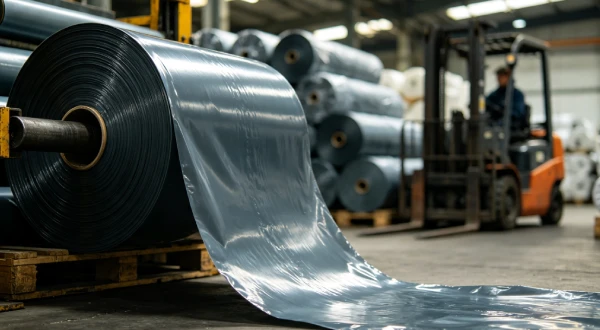
Proper inspection upon receipt is the first critical step in protecting liner quality.
Receiving Checklist:
| Item | Verification |
|---|---|
| Delivery documentation | Confirm order number, quantity, specification |
| Roll identification | Verify batch numbers, roll numbers |
| Material specification | Confirm thickness, grade, manufacturer |
| Physical condition | Inspect for damage, moisture, contamination |
| Test certificates | Verify compliance with GRI-GM13 |
| Handling documentation | Record receipt date, storage location |
Table scrolls horizontally on mobile
Inspection Procedure:
- Visual inspection: Check all rolls for visible damage (tears, edge damage, moisture)
- Roll measurements: Verify width and length (if possible)
- Documentation review: Confirm batch numbers, test certificates
- Damage documentation: Photograph any damage found
- Storage allocation: Assign storage location and record in inventory
Damage Types to Identify:
| Damage Type | Description | Action |
|---|---|---|
| Tear or puncture | Visible hole or cut in roll | Document, segregate, or reject |
| Edge damage | Crushed, frayed, or uneven edges | Document, assess usability |
| Moisture ingress | Water stains or dampness | Document, dry before use |
| Core crushing | Deformed core from stacking | Document, assess usability |
| UV degradation | Discolouration, chalking, embrittlement | Document, reject if extensive |
| Abrasion | Surface scratches or scuffing | Document, assess usability |
Table scrolls horizontally on mobile
5️⃣ Storage Area Requirements
The storage area must be designed to protect rolls from damage and environmental exposure.
Storage Area Requirements:
| Requirement | Specification |
|---|---|
| Surface | Level, well-drained, clean, and dry |
| Drainage | Positive drainage away from stored rolls |
| Access | All-weather access for handling equipment |
| Security | Controlled access, protection from vandalism |
| Ventilation | Good air circulation to prevent moisture |
| UV protection | Indoor storage or UV-blocking covers |
Table scrolls horizontally on mobile
Storage Area Types:
| Type | Advantages | Disadvantages |
|---|---|---|
| Indoor warehouse | Full protection, controlled environment | Limited availability, cost |
| Covered storage | UV protection, rain protection | Limited, ventilation concerns |
| Outdoor (with covers) | Flexible, lower cost | UV risk, moisture risk |
| Outdoor (uncovered) | Lowest cost | UV damage, moisture damage |
Table scrolls horizontally on mobile
Storage Area Layout:
- ✅ Dedicated area: Separate from other site activities
- ✅ Aisles: Adequate for handling equipment
- ✅ Stacking areas: Designed for roll storage (horizontal or vertical)
- ✅ Access: Clear pathways for roll movement
- ✅ Fire protection: Fire extinguishers, no ignition sources
6️⃣ Roll Storage Practices
Proper storage practices protect rolls from damage and maintain quality.
Roll Orientation:
| Orientation | Advantages | Disadvantages |
|---|---|---|
| Vertical (on end) | Less floor space, no core crushing | Handling difficulty, stability issues |
| Horizontal (on side) | Easier handling, stable | More floor space, core crushing risk |
Table scrolls horizontally on mobile
Stacking Guidelines:
| Factor | Guideline |
|---|---|
| Maximum stack height | No more than 3 rolls high |
| Stacking surface | Flat, level, and clean |
| Support | Cradles or racks for horizontal storage |
| Separation | Separate rolls to prevent abrasion |
| Labelling | Clearly visible labels on each roll |
Table scrolls horizontally on mobile
Storage Conditions:
| Condition | Requirement |
|---|---|
| Temperature | Avoid extremes (< 0°C or > 50°C) |
| Humidity | Low humidity (< 80% RH) |
| UV exposure | Protected from direct sunlight |
| Moisture | Keep dry and covered |
| Chemicals | No chemical storage nearby |
Table scrolls horizontally on mobile
Inventory Management:
| Practice | Requirement |
|---|---|
| FIFO (First-In, First-Out) | Use oldest material first |
| Labelling | Clear identification of each roll |
| Tracking | Document movement and location |
| Stocktaking | Regular physical inventory |
7️⃣ UV Protection and Exposure Limits
UV protection is the most critical factor in outdoor roll storage.
UV Exposure Limits:
| Climate | Maximum Exposure (Outdoor, Uncovered) |
|---|---|
| Temperate | 30 days |
| Tropical | 15 days |
| High altitude | 20 days |
| Arid/desert | 15 days |
| Indoor (UV-protected) | Unlimited |
Table scrolls horizontally on mobile
UV Protection Methods:
| Method | Protection Level | Implementation |
|---|---|---|
| Indoor storage | 100% | Warehouse or building |
| Opaque covers | 95–100% | UV-blocking tarpaulins |
| White/reflective covers | 80–90% | Light-coloured covers |
| Shade structures | 70–80% | Temporary structures |
| Orientation | 50–70% | Avoid direct sunlight |
Table scrolls horizontally on mobile
UV Damage Indicators:
| Indicator | Description |
|---|---|
| Discolouration | Fading or colour change (black to brown/grey) |
| Chalking | White powdery surface |
| Surface embrittlement | Cracking or crazing on surface |
| Loss of gloss | Dull appearance |
| Reduced HP-OIT | Antioxidant depletion in surface layer |
UV Protection Inspection:
- ✅ Daily: Check cover integrity, ensure full coverage
- ✅ Weekly: Inspect for UV damage indicators
- ✅ After storms: Check for cover damage and moisture ingress
8️⃣ Real Engineering Failure Cases
Case 1: UV Damage from Extended Outdoor Storage — Middle East Project, 2019
Specification used: 2.0mm HDPE, stored outdoors without cover for 90 days. High UV exposure in desert climate.
Observed failure: Surface embrittlement and chalking on the outer 0.2mm of rolls. Welding of outer layer was unsuccessful. 30% of material was unusable.
Timeline:
2019: Rolls received, stored outdoors without cover
2019: 90 days of UV exposure in desert climate
2019: Surface embrittlement detected
2019: 30% of material unusable, reorder required
Cost: $250,000 (material replacement + project delays)
Root cause: Rolls stored outdoors without UV protection for 90 days in a high-UV desert climate. UV damage caused surface embrittlement and chalking. The outer layer could not be welded.
Engineering lesson: Limit outdoor storage to 15 days in desert climates. Use opaque UV covers (minimum 95% UV block). Inspect regularly for UV damage.
Case 2: Core Crushing from Improper Stacking — Australian Project, 2020
Specification used: 2.0mm HDPE, rolls stacked 5 high on their sides without cradles. Bottom rolls crushed from weight.
Observed failure: Core crushing on bottom rolls. 10–20m of material unusable at roll ends. Material waste due to damaged sections.
Timeline:
2020: Rolls received, stacked 5 high
2020: Core crushing on bottom rolls
2020: 10-20m per roll unusable
2020: Material replacement for damaged sections
Cost: $100,000 (material waste + rework)
Root cause: Rolls stacked too high (5 rolls) without cradles. Weight of upper rolls crushed the cores of bottom rolls. Damaged material at roll ends was unusable.
Engineering lesson: Maximum stack height of 3 rolls. Use cradles or racks for horizontal storage. Inspect rolls after stacking for core damage. Rotate material to prevent long-term stacking.
Case 3: Moisture Damage During Storage — Southeast Asian Project, 2021
Specification used: 2.0mm HDPE, rolls stored outdoors under tarpaulins without ventilation. Rain caused moisture ingress.
Observed failure: Moisture trapped between roll layers. Welding issues (porosity, contamination) with affected material. 15% of material affected.
Timeline:
2021: Rolls stored outdoors under tarpaulins
2021: Rain, moisture ingress, no ventilation
2021: Moisture trapped between layers
2021: Welding issues with affected material
Cost: $150,000 (material drying, rework, delays)
Root cause: Tarpaulins without ventilation trapped moisture. Rain caused water ingress. Moisture trapped between layers caused welding issues.
Engineering lesson: Use ventilated covers for outdoor storage. Elevate rolls off the ground. Inspect for moisture regularly. Store in dry conditions.
Failure Case Cost Summary
| Case | Location | Failure Mode | Cost | Primary Lesson |
|---|---|---|---|---|
| Case 1 | Middle East | UV damage | $250k | Limit outdoor storage to 15 days in desert climates |
| Case 2 | Australia | Core crushing | $100k | Max 3 rolls high, use cradles |
| Case 3 | SE Asia | Moisture damage | $150k | Ventilated covers, elevate off ground |
9️⃣ Comparison With Alternative Liner Systems
| Property | HDPE (2.0mm) | LLDPE (1.5mm) | PVC (1.5mm) | EPDM (1.5mm) | GCL |
|---|---|---|---|---|---|
| UV resistance | Good (with carbon black) | Moderate | Poor | Good | N/A |
| Outdoor storage limit | 15–30 days | 15–30 days | 7–14 days | 30–60 days | Limited |
| Impact resistance | Good | Good | Poor | Fair | N/A |
| Abrasion resistance | Good | Moderate | Poor | Fair | N/A |
| Moisture sensitivity | Low (surface only) | Low | Moderate | Low | High |
| Core crushing risk | Moderate | Moderate | Low | Low | High |
| Storage stability | 12+ months | 12+ months | 6 months | 12+ months | Limited |
| Cost relative to HDPE | 1.0x | 1.0–1.1x | 1.2–1.5x | 2.0–3.0x | 0.6–0.8x |
Table scrolls horizontally on mobile
🔟 CQA Requirements for Roll Management
Comprehensive CQA for roll management protects material quality and provides traceability.
Receiving CQA:
- ✅ Delivery inspection: Verify quantity, specification, condition
- ✅ Test certificate review: Confirm compliance with GRI-GM13
- ✅ Damage documentation: Photograph and record any damage
- ✅ Material segregation: Separate damaged from acceptable material
Storage CQA:
- ✅ Storage conditions: Verify UV protection, moisture protection, ventilation
- ✅ Stacking: Confirm proper stacking height, orientation, support
- ✅ Access: Verify clear access for handling equipment
- ✅ Inventory: Confirm FIFO rotation, accurate records
Handling CQA:
- ✅ Equipment: Verify proper handling equipment, attachments
- ✅ Procedure: Confirm proper lifting and movement procedures
- ✅ Damage prevention: Ensure no sharp edges or chains on rolls
Documentation Requirements:
- ✅ Delivery records: Date, quantity, specification
- ✅ Inspection reports: Condition, damage, test certificates
- ✅ Storage records: Location, date, conditions
- ✅ Movement logs: When moved to installation
- ✅ Damage records: Photographs, documentation
1️⃣1️⃣ Professional Engineering Recommendation
Roll Management Checklist:
| Phase | Item | Verification |
|---|---|---|
| Receiving | Inspection | 100% visual |
| Receiving | Documentation | Test certificates, batch numbers |
| Storage | UV protection | Covers or indoor storage |
| Storage | Stacking | ≤ 3 rolls high, cradles |
| Storage | Moisture protection | Elevate, ventilated covers |
| Storage | Inventory | FIFO, labels |
| Handling | Equipment | Proper attachments |
| Handling | Procedure | No sharp edges or chains |
| Pre-installation | Inspection | Final condition check |
| Pre-installation | Traceability | Roll numbers recorded |
Table scrolls horizontally on mobile
Critical Storage Requirements:
- ✅ UV protection: Cover all rolls stored outdoors
- ✅ Stacking limit: Maximum 3 rolls high
- ✅ Support: Use cradles or racks for horizontal storage
- ✅ Ventilation: Ventilated covers for outdoor storage
- ✅ Elevation: Store rolls off the ground on pallets
- ✅ Inventory: FIFO rotation with complete records
1️⃣2️⃣ FAQ Section
Q1: What are the standard roll dimensions and weights for HDPE liner?
Typical roll dimensions: 5–7m wide, 50–150m long, weighing 1,500–4,500 kg. Thicker liners (2.5mm) are heavier and require heavier handling equipment.
Q2: How long can HDPE rolls be stored outdoors without protection?
Without UV protection, HDPE rolls should not be stored outdoors for more than 15–30 days depending on climate. UV damage to the outer layer occurs within 30 days of exposure.
Q3: What type of UV protection is required for roll storage?
UV protection includes: indoor storage (preferred), opaque tarpaulins (minimum 80% UV block), reflective covers, or white/light-coloured covers to reduce heat absorption.
Q4: How should rolls be stacked for storage?
Rolls should be stored on their ends (vertical) or on their sides (horizontal) on a flat, clean surface. Stacking height must be limited — no more than 3 rolls high to prevent core crushing.
Q5: What equipment is required for roll handling?
Equipment includes: forklifts with roll handling attachments, spreader bars for lifting, slings, and cranes for oversized rolls. Sharp edges and chains must be avoided to prevent liner damage.
Q6: How should rolls be inspected upon receipt?
Inspection includes: verify material type and thickness, check for damage (tears, edge damage, moisture), verify roll dimensions and weight, confirm batch numbers and test certificates, and photograph any damage.
Q7: What is the maximum storage time for HDPE rolls?
HDPE rolls can be stored for 6–12 months under proper conditions (covered, dry, temperature-controlled). Outdoor storage without cover should be limited to 15–30 days.
Q8: How should rolls be stored in wet conditions?
In wet conditions: store on elevated platforms (pallets or blocks), cover with waterproof tarpaulins (with ventilation), ensure drainage away from storage area, and avoid ground contact.
Q9: How should rolls be rotated for inventory management?
Use FIFO (First-In, First-Out) inventory management. Each roll should be labelled with arrival date, batch number, and material specification. The oldest material should be used first.
Q10: What documentation is required for roll management?
Documentation includes: delivery dockets, inspection reports, storage records (location, date, conditions), movement logs (when moved to installation), and photographs of any damage.
1️⃣3️⃣ Technical Conclusion
Proper handling and storage of HDPE liner rolls on site is essential for protecting material quality and preventing damage. UV damage, core crushing, edge damage, and moisture contamination are the most common storage-related failures, each costing 10–30% of material value when they occur. These failures are entirely preventable with proper procedures.
UV protection is the most critical factor in outdoor roll storage. HDPE rolls should be stored indoors or under opaque covers, with outdoor storage limited to 15–30 days depending on climate. UV damage causes surface embrittlement and chalking, making the outer layer unweldable. Regular inspection for UV damage indicators (discolouration, chalking, embrittlement) is essential.
Physical handling requires proper equipment and procedures. Forklifts with appropriate attachments, spreader bars, and slings prevent roll damage during movement. Sharp edges and chains must be avoided. Rolls should be stacked no more than 3 high to prevent core crushing, with cradles or racks for horizontal storage.
Moisture management is essential in wet conditions. Rolls should be stored on elevated platforms, covered with ventilated tarpaulins, and protected from ground contact. Moisture trapped between layers can cause welding issues (porosity, contamination) that compromise seam quality.
CQA requirements for roll management include receiving inspection, storage condition monitoring, damage documentation, and complete traceability records. FIFO inventory management ensures oldest material is used first, preventing extended storage of any roll. The cost of proper handling and storage ($5,000–20,000 per project) is far lower than the cost of material damage or project delays ($100,000–500,000). Proper handling and storage are essential for protecting the investment in high-quality geomembrane material.
📚 Related Technical Guides
Geomembrane Roll Handling: A CQA Engineer's Field ManualUV Protection for HDPE Liner Storage: Cover Selection and InspectionOn-Site Liner Storage: Site Layout and Logistics PlanningRoll Damage Assessment: Inspection and Usability DeterminationHDPE Geomembrane Failure Investigation: Handling and Storage-Related Root Cause Analysis